
National Week of Prayer for the Healing of AIDS
Text of the speech given by Aaron Brown at Rochester’s Genesee Baptist Church, March 1, 2026
My Speech for the Annual Day of Prayer for Those Living with HIV/AIDS
— Aaron Brown, PrEP Specialist, URMC Department of Infectious Disease
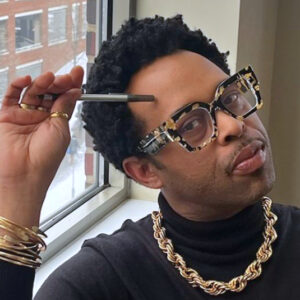
Good Afternoon!
I had another greeting prepared, but something in this moment is telling me to start with saying “THANK YOU.” Thank you for opening these doors. Thank you for opening your hearts. And thank you for being willing to have a conversation that, for a long time, too many sanctuaries were afraid to touch.
I stand before you as a Black queer man who grew up on the pews during the height of the AIDS movement. I remember the hymns. I remember the prayers. And I also remember the whispers. I remember when HIV was spoken about in hushed tones—if it was spoken about at all. I remember the funerals. So many funerals. Programs printed on glossy paper. Choirs singing through tears. Questions that didn’t have answers yet.
Back then, HIV felt like a storm that would never pass.
And yet… here we are.
Because of researchers who refused to quit. Because of doctors, nurses, activists, and everyday people who demanded better. Because of clinical trials, late nights in laboratories, community organizers on megaphones, and patients brave enough to try something new—HIV is no longer a guaranteed death sentence. Today, people living with HIV can live long, full, beautiful lives. With treatment, they can become undetectable—and undetectable means untransmittable. With prevention tools like PrEP, people can protect themselves with confidence and clarity. For people who hate the daily reminder that comes with taking pills, we have injectables that you can get every two months that treat HIV and keep your immunosuppressed. We also have two options of injections that can also prevent you from contracting HIV. If you’re a victim of sexual assault and you go to the ED right after it happens, there’s a medication you can take to prevent you from contracting HIV. THERE ARE OPTIONS! You can LIVE! And live well!
That is not small. That is miraculous.
But family, we cannot toast the future without telling the truth about the past.
We cannot celebrate the science without remembering the souls.
With a show of hands, does anyone in this room know someone who’s living with HIV?
Does anyone in this room know someone who has died from AIDS? Do you remember their face? You don’t have to say their name out loud, just take a moment to close your eyes, right now, and say their name in your head.
There are some of us who remember – but for those don’t, you should know that we lost artists. We lost preachers. We lost sons and daughters. We lost mothers. We lost whole choirs’ worth of voices. And too often, we lost them in silence. So today, we honor them. We say their absence matters. Their lives mattered. Their stories still matter.
And here’s the complicated part: when medicine caught up… when treatment became effective… when HIV stopped being the headline crisis it once was… the world got quiet. Almost too quiet.
It’s as if once survival became possible, society decided remembrance was optional.
But in our community—especially in Black communities—HIV never disappeared. It just stopped being talked about. And when we stop talking, stigma grows. When stigma grows, people hide. When people hide, they don’t get tested. They don’t seek treatment. They don’t ask questions. They don’t reach out.
Let me say something plainly: in this era, people rarely die from HIV itself. They die from the effects of stigma. They die from shame. From isolation. From the fear of being judged more than the virus itself.
Now although I was raised by a Pentacostal preacher and a village of praying women, I don’t know everything about the Bible. One thing I DO know is stigma is not of God.
Shame does not come from God.
Silence that harms does not come from God.
If we believe in a God of love, then we must believe in a love that is informed. A love that is compassionate. A love that makes room at the table for everyone—positive, negative, questioning, learning.
And while we’re telling the truth, we also need to say this: women have been forgotten in this conversation. Forgotten in sermons. Forgotten in campaigns. Forgotten in funding priorities. But they have not been forgotten in the statistics. Women (especially Black women) continue to be affected by HIV in ways that are often overlooked. They are caregivers, mothers, partners, leaders… and too often, they are navigating stigma alone.
If we are going to be a faith community that reflects God’s heart, then we must widen the lens. HIV is not just a “gay issue.” It is not just a “young people issue.” It is not just a “somebody else” issue. It is a human issue. And faith calls us to humanity.
I think about that little queer kid I used to be—sitting on a pew, trying to reconcile what he heard about love with what he felt in his spirit. Watching the AIDS crisis unfold. Hearing prayers for healing but not always hearing prayers for understanding.
If you had told him that one day he would stand in a church—not hiding, not shrinking, not whispering—but speaking boldly about hope, about science, about compassion… he might not have believed you.
But this is a full-circle moment.
Because today, I am not just a witness to loss. I am a witness to progress. I am a witness to resilience. And right now, looking out at all of you, I am a witness to love.
God’s love.
Not the kind that excludes. Not the kind that shames. But the kind that shows up. The kind that listens. The kind that says, “Your health matters. Your life matters. Your dignity matters.”
So here is our call to action:
Let’s talk about sexual health openly—in our ministries, in our small groups, in our homes.
Let’s encourage testing as an act of stewardship, not suspicion.
Let’s learn about PrEP and treatment so we can replace myths with facts.
Let’s check on the women in our lives and make sure they are not carrying this conversation alone.
Let’s make this church a place where someone living with HIV can walk in without fear—and walk out knowing they are loved. And when you all start your prayer this evening, remember that name that I asked you about earlier? Say their name. Say their name so that heaven can hear your praying for them out of the depths of your heart. That’s action.
And we know faith without action is incomplete. And love without courage is quiet. Today, we choose courage.
We choose gratitude—for the researchers, for the activists, for the caretakers, or the survivors, for those we lost, and for the God who carried us through it all.
From a queer kid on the pews during the AIDS movement… to a grown man standing in this sanctuary, witnessing a community willing to lean in instead of look away—this is holy.
This is healing. This is what love looks like.
And for this, I am grateful.